
The Supreme Court has modified its interim order, staying the strictures and compensation directive passed by the Allahabad High Court against Noida DM Medha Roopam. The High Court had ordered Roopam to pay Rs 5 lakh from her salary for the detention of student Akriti Chaudhary under the NSA, criticising the DM's conduct. The Supreme Court's interim order specifically stays paragraphs 27 to 33 of the High Court judgment, which contained the strictures and cost award, but does not stay the quashing of Chaudhary's detention.

The Supreme Court is scheduled to hear a plea on Sunday seeking contempt proceedings against authorities for allegedly violating its directive against a complete prohibition on metro and train services in Delhi during the CJP protest. The plea argues that the blanket shutdown and lack of transparent advisories constitute a deliberate disregard for the court's October 9 order, which had called for regulation rather than outright prohibition of public transport.
The Supreme Court has indicated that individuals with a conscientious objection should not face criminal consequences for declining to sing Vande Mataram, while asking the Centre to consider a 1986 judgment protecting similar rights concerning the national anthem.

The Delhi High Court has asked the Centre to respond to Telegram's petition challenging a temporary government order that restricts access to its platform and disables message-editing features in India, citing concerns over potential cheating during the NEET-UG 2026 re-examination.

The Supreme Court has strongly asserted the critical need to instill fear in criminals and enhance women's safety across Delhi-NCR, taking suo motu cognisance of recent alarming rape incidents.

A special five-member NCLT bench has issued notices to all parties in Subhash Chandra's personal insolvency case and directed the Essel Group Chairman not to alienate his properties, either directly or indirectly, following a split verdict on a repayment plan.

The Delhi high court ordered the restoration of the Cockroach Janta Party's X handle on Tuesday after the Centre informed it that the account was withheld to prevent "chaos" ahead of the NEET re-test and that there would be no difficulty revoking it now.

The Supreme Court has taken a serious view of allegations of harassment against a minor girl who participated in the July Cockroach Janta Party protests. The court emphasised that nobody should be allowed to intimidate a victim or her family from pursuing criminal proceedings and directed the Solicitor General to ensure action on the girl's FIR, seeking reports from Delhi and Uttar Pradesh governments.

Adhikari, the leader of the opposition in the West Bengal assembly, had also denied the meeting, saying that he had recently gone to Mehta's residence in Delhi regarding a case related to "post-poll violence" in the state but "could not meet him in person".

Leaders of the Cockroach Janta Party (CJP), including Saurav Das and Ashutosh Ranka, have vowed to escalate their agitation against Chief Election Commissioner (CEC) Gyanesh Kumar, expanding protests nationwide after their release from detention. They allege an "emergency-like situation" created by the Modi government, illegal detentions, and harassment of protesters, drawing parallels to the 1975 Emergency. The CJP is protesting alleged irregularities in voter rolls and demanding Kumar's resignation, accusing authorities of suppressing dissent.

The Supreme Court has decided to form a high-powered committee, including retired judges and former top police officials, to investigate allegations of police excesses against student protesters in Delhi. The committee will examine video evidence and complaints, particularly from female protesters, and the court may quash FIRs against students without grave criminal antecedents, upholding the right to peaceful protest.

Essel Group Chairman Subhash Chandra has challenged the National Company Law Tribunal's (NCLT) decision to form a five-member bench to hear his personal insolvency case, arguing that the tribunal lacks the power to constitute such a bench. This comes after a split verdict and a subsequent stay on an order allowing him to settle claims.

The Supreme Court has affirmed its decision not to alter the five-member high-powered committee, led by former Justice R Subhash Reddy, which is investigating allegations of police excesses against student protesters and violence against police personnel in Delhi. The court dismissed concerns about potential bias, stating the committee acts as its "extended hand" and will function under its supervision. It also noted the suspension of an executive magistrate who issued a show-cause notice to a student involved in protests.

The Supreme Court has stated it will consider the recommendations of the Nandan Nilekani-led task force regarding the online conduct of the NEET examination, emphasising the need for additional safeguards in cybersecurity and database protection. This follows the cancellation of the NEET-UG exam due to an alleged paper leak and subsequent re-test.

The Delhi high court on Monday granted three weeks to Congress leaders Sonia Gandhi, Rahul Gandhi and others to respond to a plea by the Enforcement Directorate challenging a trial court order that refused to take cognisance of its chargesheet against them in the National Herald-linked money laundering case.

The Supreme Court has rejected pleas to reconstitute a high-powered committee investigating alleged police excesses against student protesters in Delhi, stating that the allegations against the panel were based on conjecture. The court emphasised the committee's role in ensuring fairness and transparency, and directed it to proceed with its inquiry into various issues including the use of pellet guns, targeted violence, and property destruction, while ensuring protection and confidentiality for vulnerable witnesses.

The Supreme Court is considering whether a typographical error in an arrest memo is sufficient grounds to invalidate an arrest and grant bail in a murder case. The case involves Sonam Raghuvanshi, accused of her husband's murder, who was granted bail by the Meghalaya High Court due to a procedural error in her arrest document. The Solicitor General argued that the error was clerical and the gravity of the crime should outweigh such a technicality.

The Supreme Court is reviewing a Public Interest Litigation challenging Jantar Mantar's suitability as a protest site in New Delhi, citing inconvenience to local residents and disruption of essential services. The court has issued notices to the Centre and other parties to address concerns about access and movement in the area.

The Lok Sabha Secretariat has issued notices to 20 rebel Trinamool Congress (TMC) MPs, seeking their replies within seven days regarding petitions filed by TMC leader Abhishek Banerjee for their disqualification under the anti-defection law.

The Supreme Court has scheduled a final hearing for a batch of petitions challenging the marital rape exception in Indian law. The court will examine the constitutional validity of the provision that grants immunity to husbands from prosecution for sexual acts with their wives, even under the newly enacted Bharatiya Nyaya Sanhita, 2023. This significant legal challenge follows split verdicts from High Courts and seeks to address whether such an exception aligns with fundamental rights.
The Supreme Court has declined to stay the Meghalaya High Court's order granting bail to Sonam Raghuvanshi, accused of murdering her husband during their honeymoon. Despite the state's plea citing serious allegations, the apex court noted her release and compliance with bail conditions, scheduling further hearing post-reopening.
The Supreme Court, while hearing a bail plea in a murder case, made significant observations about the changing nature of society, the vulnerability of the modern generation, the impact of nuclear families, and the role of technology in child-rearing.

Thousands of young men and women, joined by prominent personalities, protested at Shivaji Park in Mumbai, demanding the resignation of Chief Election Commissioner Gyanesh Kumar despite police denial of permission. Organised by the Cockroach Janta Party (CJP), the agitation highlighted concerns over transparency in CEC appointments and alleged irregularities in electoral roll revisions.

The Supreme Court has directed a Special Investigation Team (SIT) to expeditiously complete its probe into the alleged embezzlement of donations at the Ram temple in Ayodhya. The court also mandated the SIT to submit a sealed status report and consider suggestions from litigants for improving transparency and investigation quality.

The Delhi High Court has sought the Centre's response regarding pleas from Delhi Gymkhana Club members and staff challenging a show-cause notice for eviction. The court has asked the Solicitor General to ensure the Estate Officer's hearing is adjourned until after the next court date, indicating judicial oversight in the ongoing dispute over the club's 27.3-acre premises.

Former editor of Tehelka, Tejpal, was convicted of raping a junior colleague inside a hotel elevator in 2013 during an event organised by the magazine in Goa.

The Supreme Court has agreed to hear a plea from the Muslim side regarding the non-compliance of its directions to provide an alternative site near the disputed Bhojshala complex in Dhar, Madhya Pradesh, for Friday prayers. The Muslim side alleges the proposed site is unsuitable and too far, while the Solicitor General claims another location has been identified.

The Supreme Court has asked the Rajasthan government for an update on the health of self-styled godman Asaram, who is seeking interim bail on medical grounds. The court expressed concern about his well-being, stating "We don't want any untoward thing to happen." Asaram's counsel claims he is a high-risk patient, while the Solicitor General noted he was recently seen walking in Ayodhya and Kashi Vishwanath. The apex court is hearing his plea challenging the Rajasthan High Court's decision to uphold his conviction and life sentence for the rape of a minor.

The Supreme Court has denied interim bail to self-styled godman Asaram, who is serving a life sentence for sexually assaulting a minor. While rejecting his plea for bail on health grounds for now, the court permitted him to engage a trained caretaker for round-the-clock assistance. The court noted that Asaram's counsel had previously moved for parole, and his health condition will be monitored.

The Supreme Court has extended its order staying the arrest of Sumit Roy, personal assistant to Trinamool Congress MP Abhishek Banerjee, in connection with the Salboni land-grabbing case. The West Bengal government alleged Roy was not cooperating with the probe, while Roy's counsel argued he has a right to silence and the case is politically motivated. The court will review a sealed cover report from the police before further proceedings.
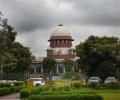
The Supreme Court will consider the Centre's plea for clarification on the applicability of its March 11 judgement regarding OBC creamy-layer criteria for the Civil Services Examination (CSE) 2025. The government highlights practical difficulties and potential unequal treatment of candidates if the ruling is applied retrospectively, as the CSE 2025 selection process concluded before the verdict. The Department of Personnel and Training (DoPT) seeks to proceed with service allocation based on the pre-March 11 criteria to avoid disruption to training schedules and ensure fairness for candidates.

The Supreme Court has quashed all FIRs against students who participated in the Cockroach Janta Party-led protests, stating the cases should not affect their future, while the government affirmed its commitment to youth welfare.

The Delhi High Court has ordered the unblocking of the Cockroach Janta Party's X handle, which was previously withheld due to concerns over potential "chaos" during the NEET re-test. The court's decision came after the Solicitor General stated that the primary concern was no longer relevant as the NEET exam was over. The CJP, a youth-driven satirical movement, aims to hold the government accountable and has gained significant digital traction.

The Supreme Court has been informed that the Aircraft Accident Investigation Bureau's final draft report on the June 2025 Air India flight AI-171 crash in Ahmedabad will be submitted in October. The court is hearing petitions seeking an independent probe into the accident, which claimed 260 lives.

The Supreme Court will consider issues related to the Satya Niketan building collapse, which killed seven students, and has called for a time-bound inspection and safety audit of PG accommodations and similar establishments across Delhi. The court noted the overlap with its ongoing pan-India monitoring of unauthorised constructions and safety violations.
The Supreme Court has directed the release of a 70-year-old man by suspending his sentence as it termed the nearly half century long litigation in a double-murder case from Jharkhand a "failure of judicial system."

The Delhi High Court has refused to direct the reopening of the CBSE's portal for the re-evaluation of Class 12 answer sheets, stating that individual students can take action if aggrieved and that reopening the portal would delay the entire result declaration process.
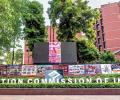
Defending the law for regulating appointment procedures of the chief election commissioner and the deputies, the Centre on Thursday told the Supreme Court that it would be wrong to assume that the prime minister and the other ministers would act in "bad faith" and against "democracy" because they have a numerical majority in the selection procedure.

The Supreme Court of India has expressed concern over media reporting in the death case of former model-turned-actor Twisha Sharma, urging restraint to ensure a fair and impartial investigation.

Former Tehelka editor Tarun Tejpal has been convicted by the Bombay High Court's Goa bench in a 2013 rape case and sentenced to 10 years' rigorous imprisonment, overturning his 2021 acquittal. Tejpal claims he is a "political victim" and will challenge the verdict in the Supreme Court, alleging his journalistic career has been targeted.
